
Free Kerala Christian Jacobite Syrian matrimony
For Jacobite Syrian Christian Church families, in Kerala and around the world.
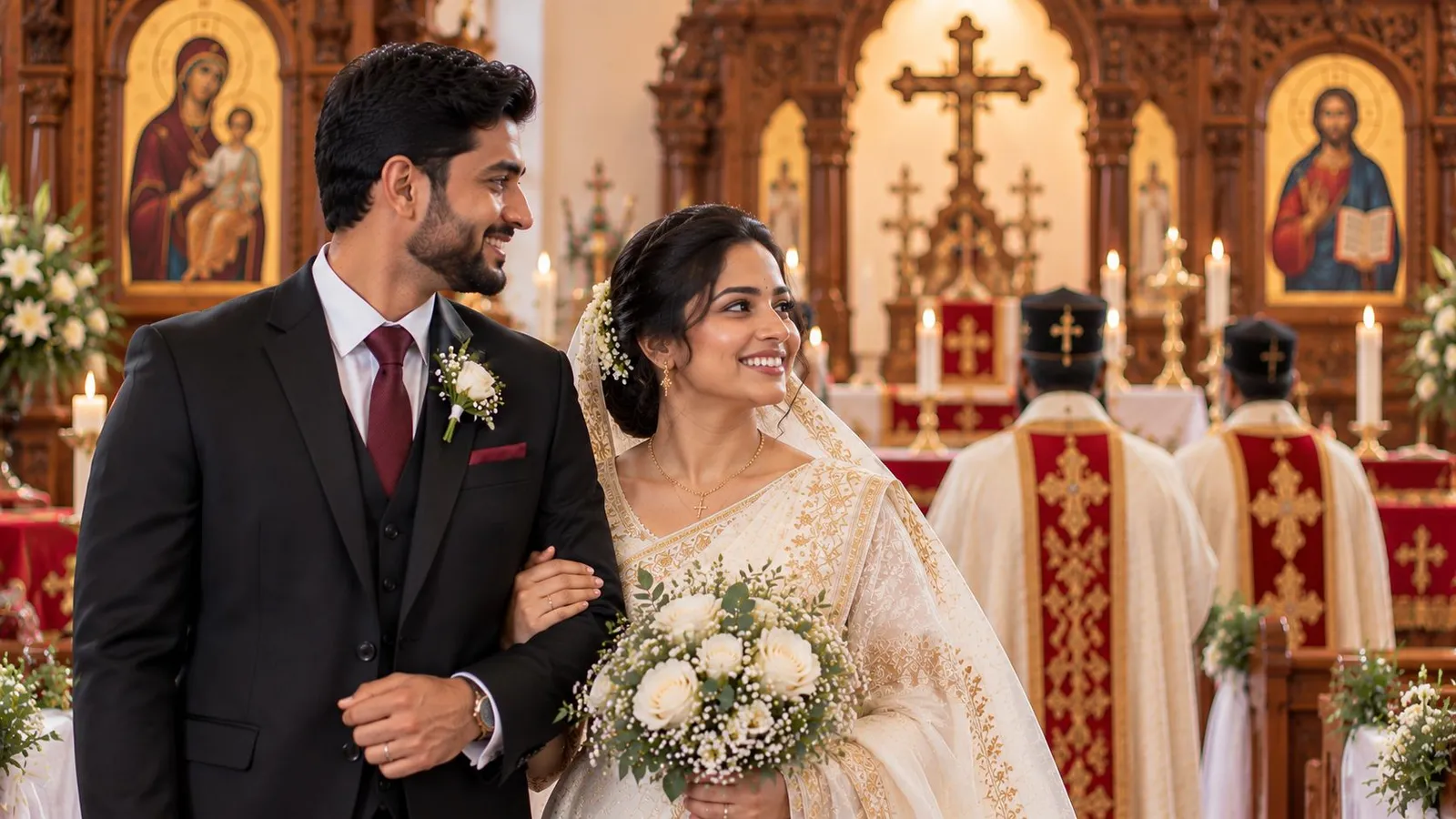
For Jacobite families
Families of the Jacobite Syrian Christian Church can look for a partner from their own church, or from the wider Orthodox family, as they prefer.
How matching works
When you create a profile, you choose your church and say how much a partner’s church matters to you: the same church, a related tradition, or open to any Christian partner. Recommendations respect that choice, and we explain why we suggest each person.
Your family, your pace
A parent or relative can create the profile, and it says so. You can claim it and decide what your family can do. When you connect with someone, you can include family members in your journey together, if you both agree.
Join free · How it works · FAQ
Jacobite Syrian Matrimony – Kerala Church Heritage & Marriage
In many Jacobite Syrian Christian homes in Kerala, family history is closely connected to a particular parish. Grandparents may remember church festivals from their childhood, parents may have been married in the same church where their children were baptized, and relatives living abroad may return for important religious celebrations.
For someone raised in a Jacobite family, the Holy Qurbana, Syriac hymns, fasting traditions, and annual church feasts can be familiar parts of life.
The Jacobite Syrian Christian Church has a distinctive place in Kerala’s Christian history. Its identity is closely connected to the ancient Saint Thomas Christian community and its continuing relationship with the Syriac Orthodox Patriarchate of Antioch.
Understanding this background can be valuable when searching for a marriage partner, especially when two people come from different Christian traditions.
The Saint Thomas Christian Roots of the Jacobite Church
The Jacobite Syrian Christian Church traces its heritage to the ancient Saint Thomas Christian community of Kerala. According to longstanding Christian tradition, St. Thomas the Apostle arrived on the Malabar Coast in AD 52 and established early Christian communities.
Although the precise historical details remain a subject of scholarly discussion, the tradition continues to occupy an important place in the religious identity of Kerala’s Syrian Christians. Over the centuries, these communities developed connections with Eastern Christianity and maintained their own forms of worship and church administration.
Holy Qurbana and West Syriac Worship
The Jacobite Syrian Christian Church follows the West Syriac liturgical tradition.
The Holy Qurbana, particularly the liturgy associated with St. James, is central to its worship. The service includes Scripture readings, prayers, hymns, incense, and ceremonial actions reflecting the church’s ancient Christian heritage.
Syriac remains an important liturgical language, although Malayalam and other languages are widely used in worship. The church observes fasting periods, major Christian feasts, and commemorations of saints.
For many Jacobite families, Sunday worship, Sunday school, parish activities, and participation in church festivals are important parts of religious life.
Marriage as a Holy Sacrament
In the Jacobite Syrian Christian Church, marriage is recognized as a Holy Sacrament.
The marriage service follows the West Syriac liturgical tradition and includes prayers asking God’s blessing upon the couple. The service traditionally includes the blessing of rings and the blessing of crowns.
The crowning ceremony expresses the spiritual dignity of marriage and the responsibilities accepted by the husband and wife. Scripture readings and prayers emphasize faithfulness, mutual care, and the responsibilities of Christian family life.
For Jacobite Christians, marriage is not simply a social agreement between two families. It is a sacred commitment celebrated within the worshipping community.
Couples preparing for marriage should consult their parish priest regarding church requirements and the approved marriage liturgy.
Minnu, Manthrakodi and Kerala Syrian Christian Wedding Customs
Alongside the religious ceremony, many Jacobite Syrian Christian weddings include traditional Kerala customs.
The minnu is a marriage pendant tied around the bride’s neck during the wedding celebration.
The manthrakodi is the wedding sari presented to the bride, symbolizing the beginning of married life.
These customs are part of the broader Kerala Syrian Christian cultural heritage and are also found in other church traditions. Their precise form and meaning may vary according to family practice and the approved church ceremony.
For many families, the combination of the Holy Matrimony service and traditional wedding customs creates a connection between Christian faith and cultural identity.
Choosing a Partner from a Jacobite Syrian Christian Family
For some Jacobite Christians, marrying someone from the same church is an important preference. A shared church background may mean familiarity with the Holy Qurbana, parish life, fasting traditions, and religious celebrations.
However, belonging to the same church does not automatically mean two people have identical beliefs or expectations.
One person may be deeply involved in parish activities, while another may attend church less frequently. A couple may also have different views about careers, relocation, financial responsibilities, or relationships with extended family.
Jacobite Matrimony for Malayali Christians Living Abroad
Jacobite Syrian Christian communities have established themselves outside Kerala, including in the United States, Canada, the United Kingdom, Australia, and Gulf countries. Many families continue to participate in Syriac Orthodox parishes and maintain connections with their home churches in Kerala.
For someone raised abroad, church identity may be shaped by English-language worship, youth fellowships, cultural associations, and visits to relatives in Kerala.
Another person may have grown up in a traditional Kerala parish where Malayalam worship and extended-family involvement were central to everyday life.
Both may identify strongly as Jacobite Christians while having different expectations about marriage.
Discussions about relocation, careers, family responsibilities, language, and future church participation can help couples understand whether their plans are compatible.
Frequently Asked Questions
What is Jacobite Syrian Matrimony?
Jacobite Syrian matrimony refers to matrimonial searches involving members of the Jacobite Syrian Christian Church, a Syriac Orthodox church community with historical roots in Kerala.
Is the Jacobite Syrian Christian Church the same as the Malankara Orthodox Church?
No. Both share Saint Thomas Christian heritage and West Syriac liturgical traditions, but they have distinct ecclesiastical leadership and administrative structures.
What is the connection between the Jacobite Church and Antioch?
The Jacobite Syrian Christian Church recognizes the Syriac Orthodox Patriarch of Antioch and All the East as its supreme spiritual head. This relationship is a defining part of the church’s ecclesiastical identity.
What happened at the Mulanthuruthy Synod in 1876?
The synod brought together Malankara church representatives under the leadership of Patriarch Ignatius Peter IV. It adopted important resolutions concerning church administration and the relationship with the Patriarchate of Antioch.
Why is Manjinikkara important to Jacobite Christians?
Manjinikkara is associated with the tomb of Patriarch Mor Ignatius Elias III, who died there in 1932. It remains an important pilgrimage destination for Jacobite Syrian Christians.
Can a Jacobite Christian marry a Malankara Orthodox Christian?
Such marriages may be possible, subject to the requirements and permissions of the respective churches. Couples should consult their parish authorities before making wedding arrangements.
What is the crowning ceremony in a Jacobite wedding?
The blessing of crowns is part of the West Syriac marriage tradition. It expresses the sacred character of marriage and the responsibilities of the couple.
Can Jacobite Christians living abroad find matrimonial matches in Kerala?
Yes. Individuals may consider partners in Kerala, elsewhere in India, or internationally, depending on their personal preferences and willingness to relocate.