
Free Kerala Christian Mar Thoma matrimony
For Mar Thoma and St. Thomas Evangelical families, in Kerala and around the world.
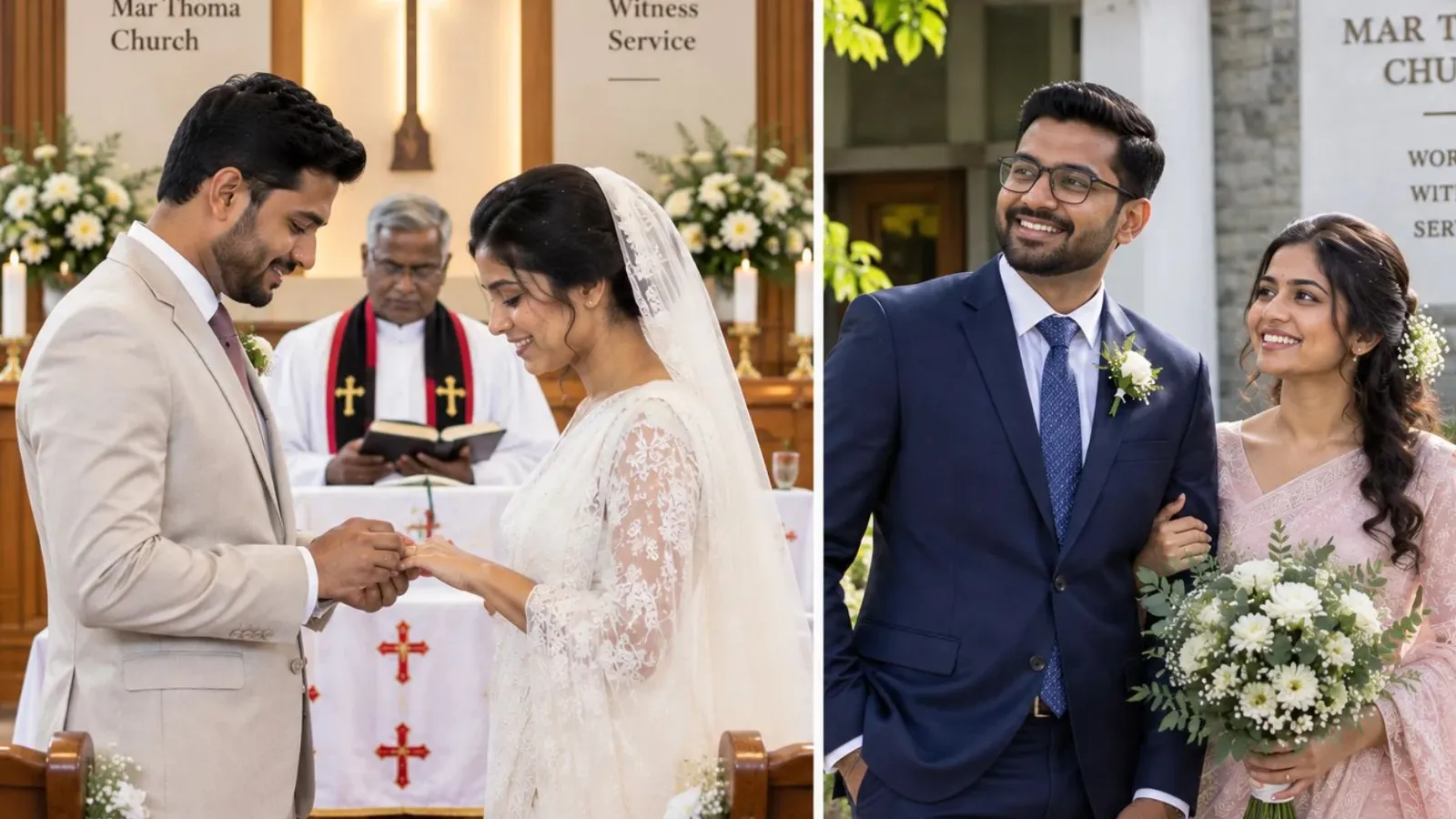
For Mar Thoma families
Godly Matrimony includes the Mar Thoma Syrian Church and the St. Thomas Evangelical Church of India. You can look for a partner from your own church, or from related traditions if you wish.
How matching works
When you create a profile, you choose your church and say how much a partner’s church matters to you: the same church, a related tradition, or open to any Christian partner. Recommendations respect that choice, and we explain why we suggest each person.
Your family, your pace
A parent or relative can create the profile, and it says so. You can claim it and decide what your family can do. When you connect with someone, you can include family members in your journey together, if you both agree.
Join free · How it works · FAQ
Kerala Mar Thoma Matrimony – Faith, Heritage & Marriage
Ask someone from a Mar Thoma family about their church, and the conversation may turn to a home parish in Kerala, a Sunday school memory, a youth fellowship, or a visit to the Maramon Convention.
These experiences are part of what makes the Mar Thoma Syrian Church distinctive. Its members belong to a Christian tradition that preserves ancient Syrian Christian roots while embracing a reformed understanding of faith and worship.
For someone considering marriage, understanding this background can be meaningful. A shared denomination may provide familiarity, but a lasting relationship also depends on personal faith, character, communication, and the kind of future two people hope to build together.
The History of the Mar Thoma Syrian Church
The Mar Thoma Syrian Church traces its spiritual heritage to the ancient Saint Thomas Christian community of Kerala.
According to church tradition, St. Thomas the Apostle brought Christianity to the Malabar Coast in AD 52. Although the details of this tradition remain a subject of historical study, it continues to be central to the identity of the Mar Thoma Church and other Saint Thomas Christian communities.
For centuries, Christians in Kerala maintained their own religious practices and connections with Eastern Christian traditions. Over time, changes in church authority, contact with European missionaries, and theological disagreements contributed to the development of several distinct churches.
The Mar Thoma Church’s modern identity took shape during a reform movement in the nineteenth century.
Abraham Malpan and the Reformation of 1836
One of the most influential figures in Mar Thoma history was Palakunnathu Abraham Malpan (1796–1845), a priest and teacher from Maramon.
Alongside Kaithayil Geevarghese Malpan and other reform-minded clergy, he questioned certain practices within the Malankara Church and advocated a renewed emphasis on the Bible, preaching, and personal Christian faith.
In 1836, reformers submitted a memorandum to the British Resident in Travancore expressing their concerns about church practices and administration.
Abraham Malpan also introduced a revised form of the Holy Qurbana in Malayalam, making the worship service more accessible to ordinary church members. His reforms removed certain practices, including prayers addressed to saints and prayers for the departed.
What Makes Mar Thoma Worship Different?
The Mar Thoma Church is often described as a reformed church with an Eastern liturgical heritage.
Unlike many Protestant churches that developed entirely new forms of worship, the Mar Thoma Church retained a revised form of the ancient West Syriac liturgy.
The Holy Qurbana remains central to its worship, alongside Scripture readings, sermons, congregational prayers, and hymns.
The church’s reformation emphasized the authority of Scripture, salvation through Jesus Christ, and the responsibility of believers to live out their faith.
This combination of traditional liturgy and reformed theology gives the Mar Thoma Church a distinctive identity among Kerala’s Christian denominations.
Marriage Traditions in the Mar Thoma Church
Marriage in the Mar Thoma Church is celebrated through a church service that includes prayers, Scripture readings, blessings, and the couple’s public commitment to one another.
The service reflects the church’s understanding of marriage as a sacred, lifelong covenant before God.
Traditional Kerala Syrian Christian wedding customs may include the tying of the minnu, a marriage pendant, and the presentation of the manthrakodi, a wedding sari.
The precise customs and arrangements may differ among families and parishes.
Couples preparing for marriage are generally expected to follow the church’s marriage procedures, which may include premarital preparation and consultation with their parish priest.
For the couple, the wedding is an important beginning. The responsibilities that follow—mutual respect, faithfulness, communication, and care for one another—are what give the commitment its everyday meaning.
Finding a Mar Thoma Life Partner
For some Mar Thoma Christians, finding someone from the same church feels natural. They may share similar experiences of worship, Sunday school, family prayer, and parish life.
Others may be open to marrying someone from a different Christian denomination.
Either way, a shared church background does not automatically mean two people are compatible.
Consider a couple who both belong to the Mar Thoma Church but have different expectations about where to live, career decisions, family responsibilities, or participation in church activities.
These differences may matter more in everyday married life than the fact that both attended the same denomination growing up.
It is worth discussing personal beliefs, financial responsibilities, plans for children, and long-term goals before making a commitment.
Mar Thoma Matrimony in India and Abroad
Mar Thoma Christians have established congregations across India and internationally, including in the United States, Canada, the United Kingdom, Australia, and the Gulf countries.
A person raised in Kerala may have grown up speaking Malayalam at home and attending a local parish. Someone raised in North America may have participated in English-language worship and youth programs while maintaining family connections to Kerala.
Both may identify strongly with the Mar Thoma Church, even though their everyday experiences differ.
When considering an international matrimonial match, couples should discuss practical matters such as relocation, employment, cultural expectations, and the role of extended family.
Being open about these questions can help prevent misunderstandings later.
Frequently Asked Questions
Is the Mar Thoma Church Orthodox or Protestant?
The Mar Thoma Syrian Church is a reformed church with roots in the ancient Malankara Syrian Christian tradition. It retains an Eastern liturgical heritage while incorporating theological emphases associated with the Protestant Reformation. It is institutionally distinct from the Malankara Orthodox Syrian Church.
Who founded the Mar Thoma Church?
The Mar Thoma Church traces its origins to the Saint Thomas Christian tradition. Its modern reformed identity developed through the nineteenth-century movement led by Abraham Malpan and other reformers. It was not founded as an entirely new Christian community by a single individual.
What is the Maramon Convention?
The Maramon Convention is an annual Christian gathering associated with the Mar Thoma Church. Beginning in 1896, it became an important center for biblical teaching, evangelism, and spiritual renewal.
Can a Mar Thoma Christian marry someone from another denomination?
Interdenominational marriages may be possible, subject to the applicable church requirements. Couples should consult their parish priest about permissions, marriage preparation, and the procedures relevant to their circumstances.
What is important when searching for a Mar Thoma matrimonial match?
Alongside church background, individuals may consider personal faith, character, education, location, family expectations, and long-term compatibility. Different families may place different levels of importance on denominational preferences.