
Free Kerala Christian Catholic Matrimony
For Syro-Malabar, Syro-Malankara, Latin and Knanaya Catholic families, in Kerala and around the world.
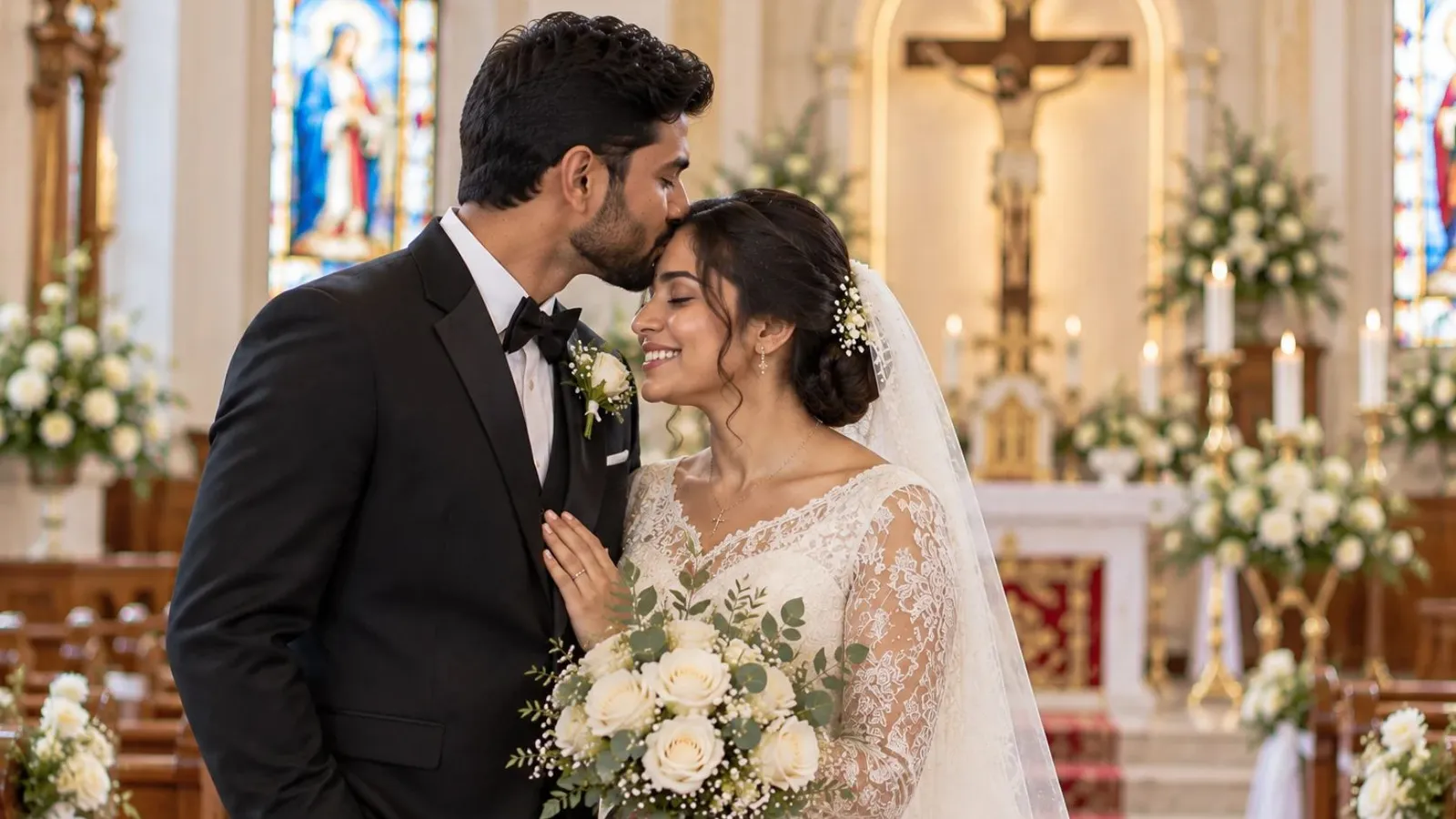
For Catholic families
Godly Matrimony includes every Catholic community in Kerala: Syro-Malabar, Syro-Malankara, Latin and Knanaya Catholic. Whether you’d like a partner from your own rite and parish tradition, or are open to any Catholic partner, you can say so.
How matching works
When you create a profile, you choose your church and say how much a partner’s church matters to you: the same church, a related tradition, or open to any Christian partner. Recommendations respect that choice, and we explain why we suggest each person.
Your family, your pace
A parent or relative can create the profile, and it says so. You can claim it and decide what your family can do. When you connect with someone, you can include family members in your journey together, if you both agree.
Join free · How it works · FAQ
Kerala Catholic Matrimony – Faith, Heritage & Marriage
For many Catholic families in Kerala, marriage brings together more than two individuals. It is a lifelong commitment rooted in faith, shaped by family traditions, and celebrated within the Church.
A Catholic growing up in Kottayam may have different parish customs from someone raised in Kochi or Thiruvananthapuram. Some families belong to the Syro-Malabar Church, others to the Syro-Malankara Church or the Latin Catholic tradition. Although they share the Catholic faith, their histories and ways of celebrating worship and marriage are not identical.
Understanding these differences can be helpful when looking for a life partner, especially when families are considering matches across Catholic traditions.
A Brief History of Catholic Christianity in Kerala
Christianity in Kerala has a history extending back many centuries. According to the ancient tradition of the Saint Thomas Christians, St. Thomas the Apostle arrived on the Malabar Coast in AD 52 and established early Christian communities.
The historical details of the apostle’s journey remain a subject of scholarly discussion, but the Saint Thomas tradition continues to hold an important place in Kerala’s Christian identity.
Over the centuries, these communities developed connections with Eastern Christian traditions, particularly those of the Persian Church of the East. Their worship, customs, and church organization reflected a distinctive Christian heritage.
The arrival of Portuguese missionaries in the late fifteenth and sixteenth centuries brought significant changes to Kerala’s Christian communities. Differences over church authority, liturgical practices, and traditions eventually contributed to divisions and the development of distinct church identities.
Today, Kerala’s Catholic community includes three major traditions: Syro-Malabar, Syro-Malankara, and Latin Catholic. Each is part of the worldwide Catholic Church in communion with the Pope, while preserving its own liturgical heritage.
Three Catholic Traditions in Kerala
Syro-Malabar Catholic Church
The Syro-Malabar Church traces its roots to the ancient Saint Thomas Christian community. Its liturgical heritage is associated with the East Syriac tradition, and the Holy Qurbana remains central to its worship.
Many Syro-Malabar families have longstanding connections with parishes across central Kerala, particularly in regions such as Kottayam, Thrissur, Ernakulam, Pala, and Changanassery.
For someone raised in a Syro-Malabar household, parish festivals, family prayers, religious education, and the celebration of the sacraments may be familiar parts of life.
When considering marriage, some families prefer a partner from the same church tradition. Others are open to matches from different Catholic communities.
Explore Syro-Malabar Matrimony
Syro-Malankara Catholic Church
The Syro-Malankara Catholic Church has a different historical journey. It emerged from the Malankara reunion movement led by Archbishop Mar Ivanios, with formal reunion with the Catholic Church taking place in 1930.
Unlike the Syro-Malabar Church, which follows the East Syriac liturgical tradition, the Syro-Malankara Church follows the West Syriac tradition.
Its worship, prayers, vestments, and liturgical calendar reflect this heritage. The church has a significant presence in southern Kerala, including areas such as Thiruvananthapuram and Pathanamthitta, as well as communities elsewhere in India and abroad.
For couples from different Catholic traditions, understanding each other’s liturgical and parish backgrounds can make conversations about marriage and future family life more meaningful.
Explore Syro-Malankara Matrimony
Latin Catholic Church
The Latin Catholic Church in Kerala has a history strongly influenced by European missionary activity, particularly following the arrival of the Portuguese.
Latin Catholic communities developed along Kerala’s coastal regions and elsewhere, with longstanding parish traditions in places such as Kochi, Kollam, Alappuzha, and Thiruvananthapuram.
The Latin Church follows the Roman Rite, which differs liturgically from the Eastern Catholic traditions of Kerala.
For many Latin Catholic families, parish life, the celebration of Mass, religious festivals, and family relationships remain important parts of their cultural and spiritual identity.
When looking for a marriage partner, some people prefer someone familiar with their own parish traditions, while others are comfortable considering matches from the wider Catholic community.
Explore Latin Catholic Matrimony
What Makes Catholic Marriage Different?
In Catholic teaching, marriage between two baptized persons is a sacrament. It is understood as a lifelong covenant involving mutual commitment, fidelity, and responsibility toward one another and family life.
The wedding ceremony is therefore more than a social celebration. It carries spiritual meaning for the couple and the Church community.
Catholic couples generally participate in marriage preparation through their parish or diocese. Depending on the church and location, this may include premarital instruction, meetings with a priest, and preparation of the necessary church documents.
Although wedding customs vary among Kerala’s Catholic communities, the shared emphasis on marriage as a lasting commitment remains central.
Choosing a Partner from Another Catholic Tradition
A Syro-Malabar Catholic may meet someone from a Latin Catholic or Syro-Malankara family. Both may share the same Catholic faith while being accustomed to different forms of worship.
These differences do not automatically prevent marriage, but they can lead to practical questions.
Which parish will the couple attend after marriage? How will they maintain connections with their respective family traditions? What church practices do they hope to share with their children?
These are conversations worth having early, particularly when both families have strong connections to their church communities.
Church membership, marriage preparation, and the applicable canonical requirements should be discussed with the appropriate parish priest or church authority.
Kerala Catholic Matrimony for Families Living Abroad
Kerala Catholic communities are no longer limited to Kerala. Families have established themselves across the United States, Canada, the United Kingdom, Australia, the Gulf countries, and many other parts of the world.
For someone raised outside India, finding a partner who understands both their Catholic heritage and their everyday life can be important.
One person may want to remain abroad, while another hopes to return to Kerala. Some prefer a spouse who speaks Malayalam, while others place greater importance on shared faith, personality, education, and long-term plans.
A meaningful matrimonial search should leave room for these individual preferences rather than assuming that everyone from the same community wants the same kind of marriage.
Frequently Asked Questions
What are the main Catholic communities in Kerala?
Kerala has three principal Catholic church traditions: Syro-Malabar, Syro-Malankara, and Latin Catholic. All are in communion with the Pope, but they have distinct liturgical histories and church traditions.
Can a Syro-Malabar Catholic marry a Latin Catholic?
Yes. Both belong to the Catholic Church. However, couples should consult their parish authorities about the appropriate marriage procedures, church membership, and any relevant canonical requirements.
Can Catholics marry Christians from other denominations?
Catholic marriages involving a baptized non-Catholic Christian are possible, subject to applicable Church requirements and permission. Couples should consult their parish priest before making wedding arrangements.
Is church denomination the most important factor in Catholic matrimony?
That depends on the individuals involved. For some, belonging to the same church tradition is important. Others prioritize shared Catholic faith, personal compatibility, family values, and plans for the future.
Can Kerala Catholics living outside India look for matrimonial matches?
Yes. Kerala Catholic communities live across India and internationally. Location, willingness to relocate, cultural background, and church preferences can all be relevant considerations when searching for a partner.