
Free Kerala Christian Syro-Malankara matrimony
For Syro-Malankara Catholic families, in Kerala and around the world.
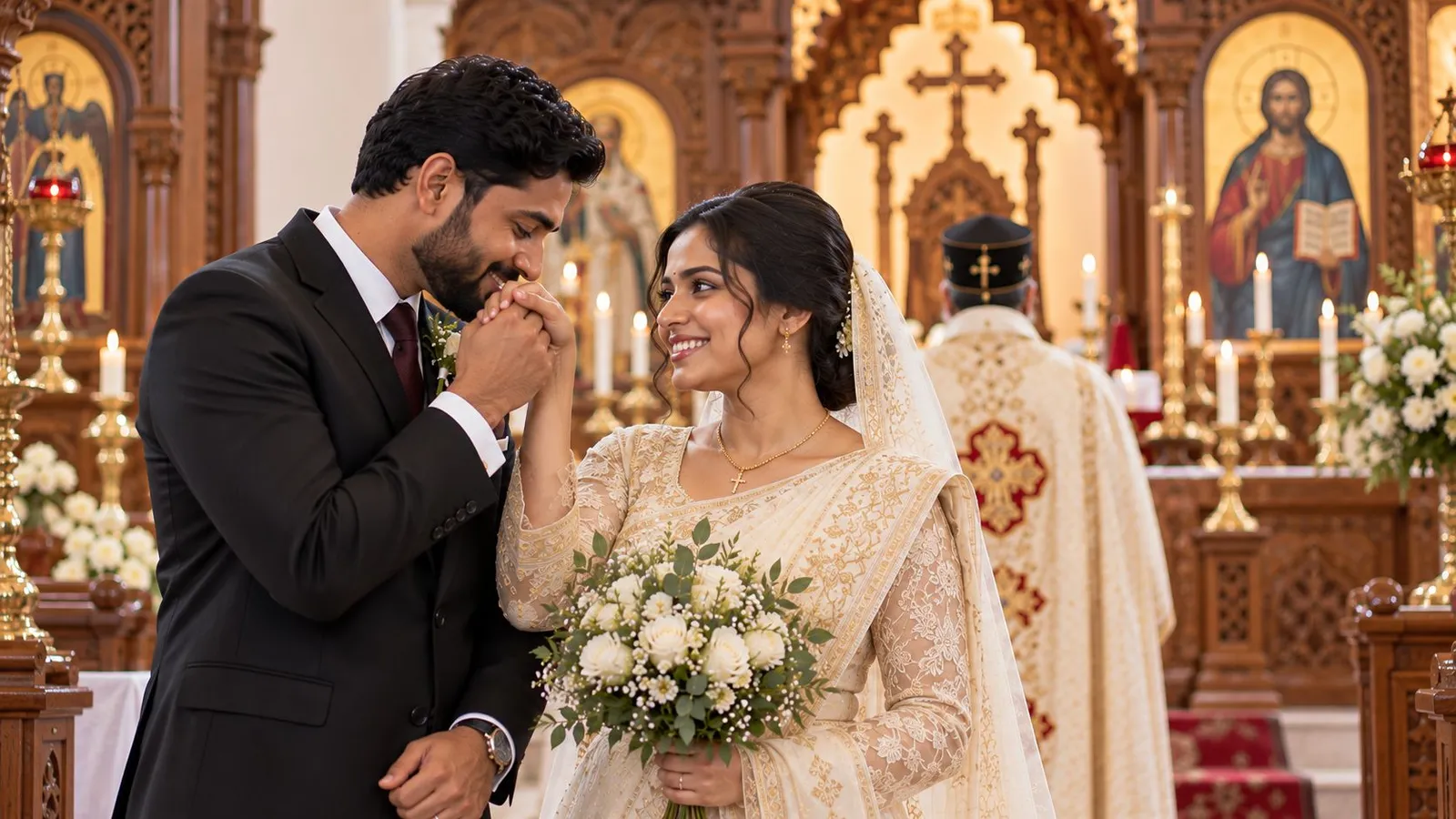
For Syro-Malankara families
Syro-Malankara Catholic families can look for a partner from their own church, from the wider Catholic family, or from related Malankara traditions, as they prefer.
How matching works
When you create a profile, you choose your church and say how much a partner’s church matters to you: the same church, a related tradition, or open to any Christian partner. Recommendations respect that choice, and we explain why we suggest each person.
Your family, your pace
A parent or relative can create the profile, and it says so. You can claim it and decide what your family can do. When you connect with someone, you can include family members in your journey together, if you both agree.
Join free · How it works · FAQ
Syro-Malankara Matrimony – Faith, Heritage & Marriage
For someone raised in a Syro-Malankara Catholic family, the sound of the Holy Qurbono, the prayers of the West Syriac tradition, and the memory of a home parish in Kerala may be deeply familiar.
A family from Thiruvalla may have its roots in the same Malankara Christian heritage as one from Thiruvananthapuram, yet each may have its own parish customs and family traditions. Even after moving abroad, many families continue to maintain these connections through church gatherings, feast days, and family celebrations.
The Syro-Malankara Catholic Church has a remarkable history. Its modern identity is closely connected to Archbishop Geevarghese Mar Ivanios and the Reunion Movement of 1930, which brought a section of the Malankara Christian community into communion with the Catholic Church while preserving its Eastern liturgical heritage.
For people considering marriage, this background is more than a historical detail. It helps explain the church traditions, spiritual practices, and family expectations that may matter when choosing a life partner.
The Holy Qurbono and West Syriac Worship
One of the most distinctive features of the Syro-Malankara Catholic Church is its worship.
The church follows the West Syriac liturgical tradition, particularly the Divine Liturgy of St. James. The Holy Qurbono includes prayers, hymns, Scripture readings, incense, ceremonial movements, and symbols that reflect the church’s Eastern Christian heritage.
This differs from the East Syriac tradition followed by the Syro-Malabar Catholic Church and the Roman Rite followed by Latin Catholics.
The church calendar, fasting practices, liturgical vestments, and celebration of major feasts also reflect its distinctive tradition. For many families, participation in the Holy Qurbono is an important part of spiritual life.
Marriage Traditions in the Syro-Malankara Catholic Church
Marriage in the Syro-Malankara Catholic Church is understood as a Holy Mystery or sacrament. The church’s marriage liturgy follows its West Syriac heritage and includes prayers and blessings expressing the sacred nature of the couple’s commitment.
The blessing of rings and the crowning of the couple are important elements of the traditional West Syriac marriage service. The crowns symbolize the spiritual dignity of marriage and the responsibilities accepted by husband and wife.
Kerala Syrian Christian cultural customs, such as the tying of the minnu and the presentation of the manthrakodi, may also be included according to the approved liturgical practice and local traditions.
Marriage Between Syro-Malankara and Orthodox or Jacobite Christians
The Syro-Malankara Catholic Church shares much of its West Syriac liturgical heritage with the Malankara Orthodox Syrian Church and the Jacobite Syrian Christian Church.
This common background can make certain worship practices and cultural traditions familiar across the communities.
Nevertheless, they are distinct churches with different ecclesiastical affiliations.
A Syro-Malankara Catholic considering marriage with an Orthodox or Jacobite Christian should understand the applicable Catholic requirements for marriage with a baptized non-Catholic Christian, as well as the requirements of the other person’s church.
Questions about the wedding ceremony, permissions, parish membership, and future family life should be discussed with the appropriate church authorities.
Shared history can provide common ground, but each individual’s faith and personal convictions also deserve respect.
Syro-Malankara Families in Kerala and Abroad
The Syro-Malankara Catholic Church has strong historical connections with southern and central Kerala, including Thiruvananthapuram, Pathanamthitta, and Thiruvalla.
Over time, members of the community have moved to other parts of India and countries such as the United States, Canada, the United Kingdom, Australia, and Gulf nations.
Some families continue to participate in Syro-Malankara parishes or missions abroad, while others maintain their religious traditions through local Catholic communities.
For someone raised outside Kerala, finding a marriage partner who understands both their Christian faith and their cultural background may be important.
Finding a Syro-Malankara Life Partner
For some Syro-Malankara Catholics, finding a partner from the same church tradition is an important preference.
Others may be open to a spouse from the Syro-Malabar, Latin Catholic, Orthodox, Jacobite, or another Christian background.
The decision is personal and should reflect the beliefs and expectations of the individuals involved. A shared religious heritage can create familiarity, but it does not guarantee compatibility.
Character, communication, mutual respect, financial responsibility, and long-term goals are equally important considerations.
Frequently Asked Questions
What is Syro-Malankara Matrimony?
Syro-Malankara matrimony refers to matrimonial searches involving members of the Syro-Malankara Catholic Church, an Eastern Catholic Church rooted in Kerala’s Saint Thomas Christian heritage.
Who founded the Syro-Malankara Catholic Church?
The church traces its heritage to the ancient Malankara Christian tradition. Its modern Catholic identity developed through the Reunion Movement led by Archbishop Geevarghese Mar Ivanios in 1930.
Is the Syro-Malankara Church Catholic or Orthodox?
The Syro-Malankara Catholic Church is an Eastern Catholic Church in full communion with the Pope. It preserves the West Syriac liturgical tradition associated with the Malankara Christian heritage.
What is the difference between Syro-Malankara and Syro-Malabar Catholics?
Both are Eastern Catholic churches. The Syro-Malankara Church follows the West Syriac tradition, while the Syro-Malabar Church follows the East Syriac tradition. Their historical development and liturgical practices differ.
Can a Syro-Malankara Catholic marry an Orthodox or Jacobite Christian?
Such marriages may be possible, subject to applicable church permissions and requirements. Couples should consult their respective church authorities before making wedding arrangements.
What is the crowning ceremony in a Syro-Malankara wedding?
The blessing of crowns is part of the West Syriac marriage tradition. It expresses the spiritual meaning of marriage and the responsibilities accepted by the couple.
Can Syro-Malankara Catholics living abroad find matrimonial matches in Kerala?
Yes. Individuals may consider matches in Kerala, elsewhere in India, or internationally, depending on their preferences, location, and willingness to relocate.