
Free Kerala Christian Syro-Malabar matrimony
For Syro-Malabar Catholic families, in Kerala and around the world.
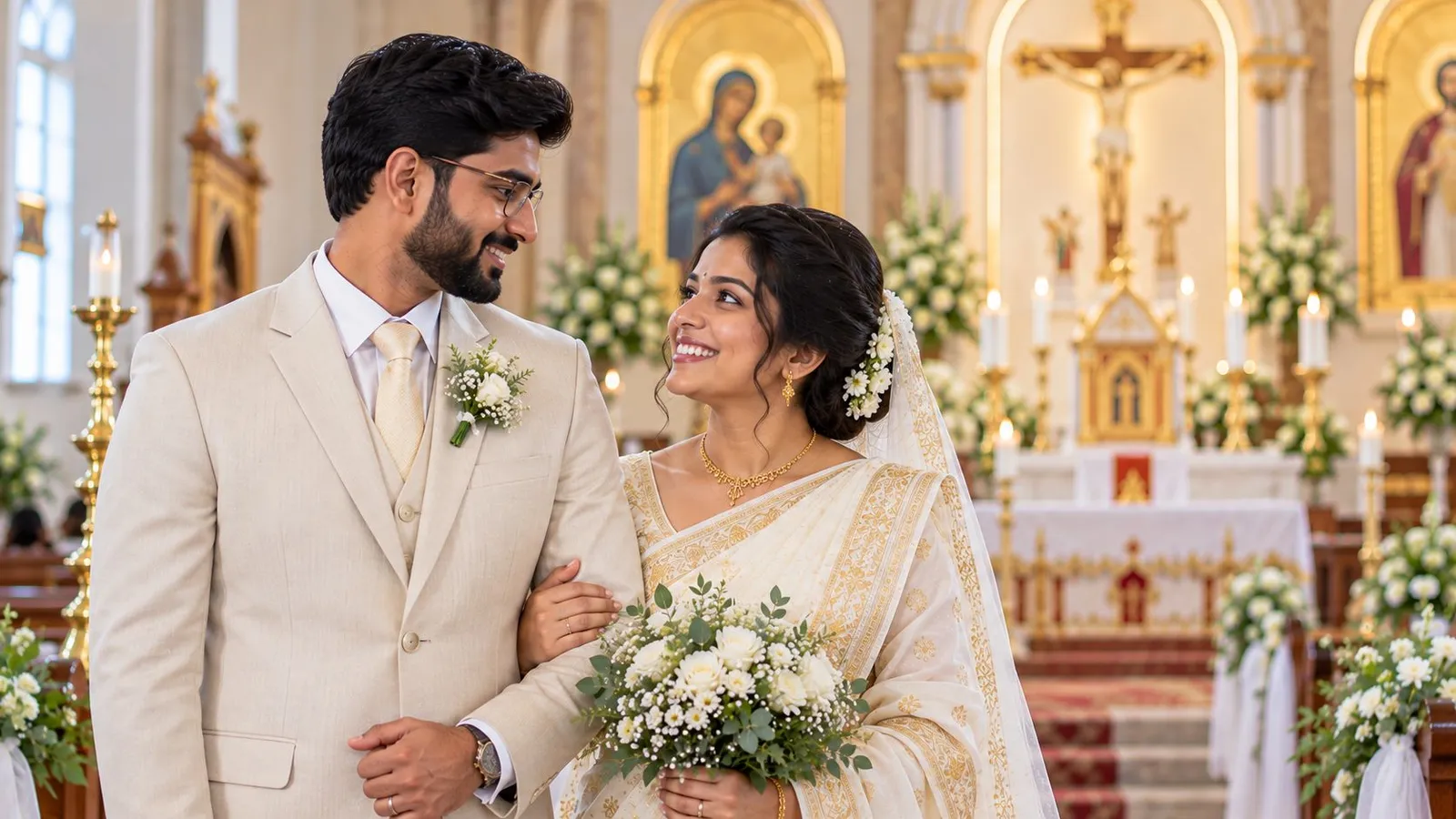
For Syro-Malabar families
The Syro-Malabar Church is the largest Catholic community in Kerala, and many families hope for a partner who shares its liturgy, parish life and traditions. On Godly Matrimony you can look for a Syro-Malabar partner, or be open to the wider Catholic family, and say which parish or diocese you belong to.
How matching works
When you create a profile, you choose your church and say how much a partner’s church matters to you: the same church, a related tradition, or open to any Christian partner. Recommendations respect that choice, and we explain why we suggest each person.
Your family, your pace
A parent or relative can create the profile, and it says so. You can claim it and decide what your family can do. When you connect with someone, you can include family members in your journey together, if you both agree.
Join free · How it works · FAQ
Syro-Malabar Matrimony – Faith, Heritage & Marriage
In many Syro-Malabar Catholic homes in Kerala, Sunday begins with the Holy Qurbana. Family prayers, parish celebrations, catechism classes, and church festivals are familiar parts of life.
For someone raised in this tradition, the parish is often closely connected to family history. Parents may have married in the same church where their children were baptized, and relatives living abroad may return to Kerala for important family celebrations.
These connections can influence matrimonial preferences. Yet belonging to the same church is only one part of choosing a life partner. Shared values, mutual respect, personal compatibility, and plans for the future matter just as much.
The Ancient Roots of the Syro-Malabar Church
The Syro-Malabar Church traces its heritage to the Saint Thomas Christians of Kerala.
According to longstanding church tradition, St. Thomas the Apostle arrived on the Malabar Coast in AD 52 and established Christian communities. Although the precise historical details of this account remain debated, the tradition continues to hold deep religious significance.
Over the centuries, these Christian communities maintained connections with Eastern Christianity, particularly the Church of the East in Persia. These connections influenced their liturgy, ecclesiastical practices, and spiritual traditions.
Unlike churches that originated through European missionary movements, the Syro-Malabar Church understands itself as a continuation of Kerala’s ancient East Syriac Christian heritage. Today, it is an Eastern Catholic Church in full communion with the Pope, with its own liturgical tradition and ecclesiastical governance.
Manasammatham: The Syro-Malabar Betrothal Tradition
One of the recognizable customs associated with Syro-Malabar marriage is manasammatham, the formal betrothal ceremony. In the traditional Kerala Christian setting, this ceremony marks the couple’s intention to marry and brings the families together in preparation for the wedding.
The Syro-Malabar Church has an approved liturgical rite for betrothal, reflecting the importance of this stage in marriage preparation. The ceremony ordinarily takes place before the wedding, following the applicable church procedures.
Marriage as a Sacrament
In Syro-Malabar Catholic teaching, marriage is a sacrament and a lifelong covenant. The church ceremony includes prayers and blessings that express the spiritual meaning of the couple’s commitment.
Traditional Kerala Syrian Christian wedding customs may include the tying of the minnu, a marriage pendant, and the presentation of the manthrakodi, a wedding sari.
The minnu is often associated with the couple’s marital commitment, while the manthrakodi forms part of the traditional celebration of the marriage.
The church’s approved marriage liturgy gives the ceremony its sacramental character. Specific cultural practices may vary among families and regions.
Choosing a Partner from Another Catholic Tradition
A Syro-Malabar Catholic may consider marrying someone from the Latin Catholic or Syro-Malankara Catholic Church.
All three belong to the Catholic communion, but they follow different liturgical traditions and have distinct church histories. For example, a Syro-Malabar Catholic raised with the East Syriac Holy Qurbana may be considering marriage with someone accustomed to the Roman Rite.
The couple may want to discuss which parish they plan to attend, how they will maintain their respective family traditions, and how they envision the religious upbringing of their children.
Church enrollment and marriage procedures are governed by applicable canon law and should be discussed with church authorities. A shared Catholic faith can provide common ground, but couples should not assume that every practical question has already been answered.
Syro-Malabar Families in Kerala and Abroad
Syro-Malabar Catholic communities have a longstanding presence in regions such as Thrissur, Ernakulam, Kottayam, Pala, Changanassery, and other parts of Kerala.
Over time, families have moved throughout India and to countries including the United States, Canada, the United Kingdom, Australia, and Gulf nations. Many continue to maintain connections with their home parishes and relatives in Kerala.
For someone raised abroad, however, the experience of being Syro-Malabar Catholic may differ from that of someone raised in Kerala.
One person may be accustomed to Malayalam-language worship and extended-family gatherings. Another may attend English-language services and have different expectations about careers, independence, or relocation.
These differences are not necessarily obstacles to marriage, but they deserve thoughtful conversations.
Finding a Syro-Malabar Life Partner
A matrimonial search often begins with familiar preferences: church background, age, education, occupation, location, and family circumstances.
For some Syro-Malabar Catholics, finding a partner from the same church is important because of shared religious practices and family traditions. Others may be open to matches from different Catholic churches or the wider Christian community.
Whatever the preference, denomination alone does not determine compatibility. Two people should also consider how they communicate, handle disagreements, approach financial responsibilities, and support each other’s personal and professional goals.
Frequently Asked Questions
What is Syro-Malabar Matrimony?
Syro-Malabar matrimony refers to matrimonial searches involving members of the Syro-Malabar Catholic Church, an Eastern Catholic Church with historical roots in Kerala’s Saint Thomas Christian community.
Is the Syro-Malabar Church Roman Catholic?
The Syro-Malabar Church is fully Catholic and in communion with the Pope, but it is an Eastern Catholic Church rather than part of the Latin Church. It follows the East Syriac liturgical tradition.
What is manasammatham in Syro-Malabar marriage?
Manasammatham is the traditional formal betrothal ceremony associated with Syro-Malabar marriage preparation. It expresses the intention to marry and is distinct from the sacrament of marriage.
Can a Syro-Malabar Catholic marry a Latin Catholic?
Yes. Both belong to the Catholic Church. The couple should consult their parish authorities regarding marriage preparation, church enrollment, and applicable procedures.
What is the difference between Syro-Malabar and Syro-Malankara Catholics?
Both are Eastern Catholic churches in communion with Rome. The Syro-Malabar Church follows the East Syriac tradition, while the Syro-Malankara Church follows the West Syriac tradition. Their historical development and liturgical practices differ.
Do Syro-Malabar Catholics need premarital preparation?
Marriage preparation is ordinarily required under the applicable church procedures. Couples should confirm course requirements, documentation, and other arrangements with their parish or diocese.