
Free Kerala Christian Knanaya matrimony
For Knanaya Catholic and Knanaya Jacobite families, in Kerala and around the world.
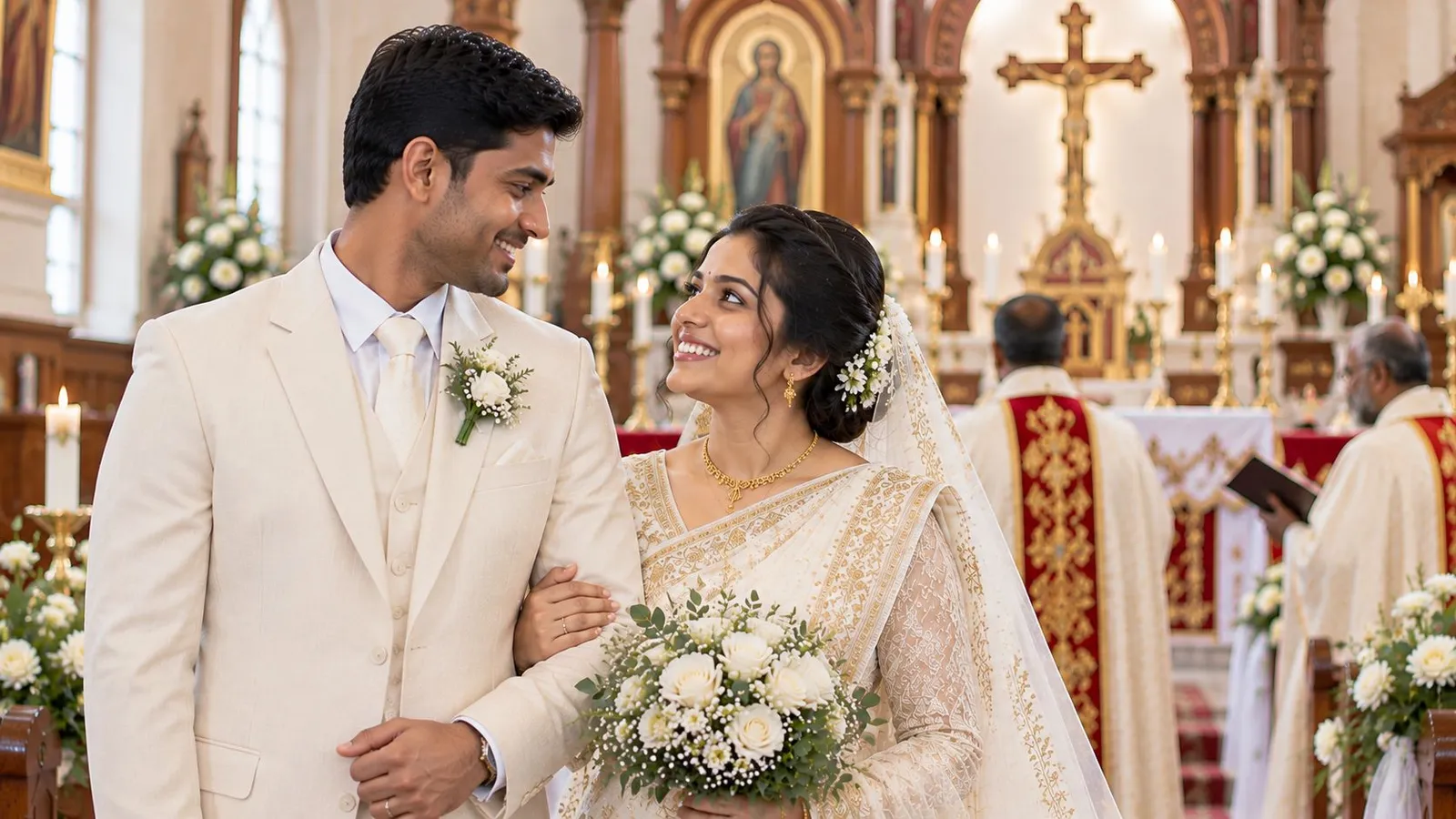
For Knanaya families
Many Knanaya families, Catholic and Jacobite, hope for a partner from within the Knanaya community, and Godly Matrimony respects that. You can choose Knanaya Catholic or Knanaya Jacobite as your church and say how much that matters to you, and recommendations follow your choice.
How matching works
When you create a profile, you choose your church and say how much a partner’s church matters to you: the same church, a related tradition, or open to any Christian partner. Recommendations respect that choice, and we explain why we suggest each person.
Your family, your pace
A parent or relative can create the profile, and it says so. You can claim it and decide what your family can do. When you connect with someone, you can include family members in your journey together, if you both agree.
Join free · How it works · FAQ
Knanaya Matrimony – Kerala Christian Heritage & Marriage
A Knanaya wedding in Kerala may include ceremonies that visitors from other Christian communities have never encountered. Traditional songs are sung, relatives gather for celebrations before the church wedding, and customs such as Chantham Charthal and Mylanchi Ideel connect the occasion to generations of family history.
These traditions help explain why Knanaya identity remains meaningful to many families, even when they have lived outside Kerala for decades.
The Knanaya community is part of Kerala’s ancient Saint Thomas Christian heritage. It includes both Catholic and Jacobite Christians who share a distinctive cultural history while belonging to different church traditions.
For someone searching for a marriage partner, understanding this background can be important. Yet every individual also brings personal beliefs, preferences, and hopes for married life that deserve equal consideration.
The Knanaya Community and the Tradition of Thomas of Cana
According to Knanaya community tradition, a group of Christians migrated from the Middle East to the Malabar Coast under the leadership of Thomas of Cana, also known as Knai Thoma. The traditional account places this migration in AD 345, during the fourth century.
Community histories describe a group of families accompanied by clergy, including a bishop traditionally identified as Uraha Mar Yousef, who settled near Kodungallur, historically known as Cranganore.
The migration story occupies an important place in Knanaya cultural identity and is remembered through oral traditions, historical accounts, and community literature.
Over time, the Knanaya community developed a distinctive identity within Kerala Christianity, preserving customs, songs, family traditions, and a strong sense of connection to its ancestral heritage.
Knanaya Catholics and Knanaya Jacobites
The Knanaya community is not confined to a single church organization.
The religious divisions that developed among Kerala’s Saint Thomas Christians, particularly following the Coonan Cross Oath of 1653 and subsequent ecclesiastical changes, also affected Knanaya families. Today, two prominent branches are Knanaya Catholics and Knanaya Jacobite Syrian Christians.
Knanaya Catholic Community
Knanaya Catholics belong to the Catholic Church and have a distinctive ecclesiastical connection with the Archeparchy of Kottayam.
Most follow the Syro-Malabar liturgical tradition, while the Knanaya Catholic community also includes members of the Syro-Malankara tradition. The Holy Qurbana, parish celebrations, family prayer, and church festivals remain important parts of religious life for many Knanaya Catholic families.
Knanaya Jacobite Syrian Christian Community
Knanaya Jacobites belong to the Syriac Orthodox tradition and maintain their own ecclesiastical organization and church heritage.
Their worship follows the West Syriac liturgical tradition, reflecting their connection with the Syriac Orthodox Church. Although Knanaya Catholics and Jacobites belong to different churches, they share elements of cultural identity, ancestry traditions, and wedding customs.
This distinction is important in matrimonial searches because Knanaya community background and church denomination are related but not identical.
What Makes Knanaya Wedding Traditions Distinctive?
Knanaya wedding celebrations are particularly known for their traditional ceremonies, songs, and family participation. Not every family follows every custom, and practices may differ between Catholic and Jacobite households or between Kerala and overseas communities.
Nevertheless, several traditions remain widely recognized.
Chantham Charthal – Preparing the Groom
Chantham Charthal is a traditional pre-wedding ceremony associated with the groom.
It involves symbolic preparation and beautification, accompanied by traditional songs and the participation of relatives. The ceremony reflects the importance of family and community in preparing the groom for marriage.
For many families, it is also an occasion to preserve customs that have been passed down through generations.
Mylanchi Ideel – Preparing the Bride
Mylanchi Ideel is a traditional ceremony associated with the bride.
The application of henna forms part of the celebration, often accompanied by prayers, songs, and the participation of family members. Although henna is used in many South Asian wedding traditions, the Knanaya ceremony has its own customary procedures and traditional songs.
It is a recognizable part of the community’s wedding heritage.
Traditional Wedding Songs
Knanaya wedding songs preserve stories, blessings, and memories associated with community life.
Some are performed during pre-wedding ceremonies, while others accompany celebrations surrounding the marriage. These songs are especially meaningful because they connect present-day weddings with older generations.
For families living abroad, maintaining the songs can be one way of passing cultural heritage to children who may not have grown up in Kerala.
Nellum Neerum Vekkal
Another traditional Knanaya wedding custom is Nellum Neerum Vekkal, a ceremonial welcome and blessing associated with the newly married couple.
The ritual includes symbolic elements such as rice and water and traditionally involves the groom’s family.
Its details may vary according to family practice.
Together, these ceremonies show how Knanaya marriage celebrations combine Christian faith, family participation, and distinctive cultural customs.
The Tradition of Marriage Within the Knanaya Community
One of the most widely discussed aspects of Knanaya identity is the tradition of endogamy, or marriage within the community.
Historically, many Knanaya families have regarded marriage within the community as a way to preserve their shared cultural identity, family connections, and inherited traditions. This preference has remained influential across generations and among Knanaya communities living abroad.
Not every Knanaya Christian approaches marriage in the same way.
Some individuals and families strongly prefer a Knanaya partner. Others may consider a wider range of Christian matrimonial matches.
Knanaya Families Living Outside Kerala
Knanaya communities have established themselves in countries including the United States, Canada, the United Kingdom, Australia, and several Gulf nations.
Community associations, religious gatherings, youth programs, and cultural celebrations have helped families maintain connections with their Kerala heritage. For younger Knanaya Christians raised abroad, cultural identity can take different forms.
When considering an international matrimonial match, it is useful to discuss where both individuals hope to live, their professional goals, and how they envision family and church life.
These practical conversations are important regardless of whether both individuals come from the same community.
Finding a Knanaya Life Partner
A person searching for a Knanaya matrimonial match may begin with community and church preferences.
Some may specifically seek a Knanaya Catholic partner, while others may prefer someone from a Knanaya Jacobite background or remain open to other Christian communities.
Beyond these preferences, a meaningful relationship requires mutual respect, compatible expectations, and an understanding of each other’s personal goals. Education, career, location, family responsibilities, and communication styles all deserve consideration.
Sharing the same community heritage may provide familiarity, but it cannot guarantee compatibility.
The purpose of a matrimonial search should be to help two people make an informed and voluntary decision about their future together.
Frequently Asked Questions
Who are Knanaya Christians?
Knanaya Christians are a distinctive community within Kerala’s Saint Thomas Christian heritage. Their traditional history connects their ancestry to a migration led by Thomas of Cana, traditionally dated to AD 345.
Are all Knanaya Christians Catholic?
No. The community includes Knanaya Catholics and Knanaya Jacobite Syrian Christians, who share elements of cultural heritage but belong to different church traditions.
What is the difference between Knanaya Catholic and Knanaya Jacobite Matrimony?
The distinction concerns church affiliation and liturgical tradition. Knanaya Catholics belong to the Catholic Church, while Knanaya Jacobites belong to the Syriac Orthodox tradition. Couples should consider the marriage requirements of their respective churches.
What is endogamy in Knanaya Matrimony?
Endogamy refers to the tradition of marrying within the Knanaya community. It has historically been important to community identity, although individual preferences and church-related circumstances can differ.
What are Chantham Charthal and Mylanchi Ideel?
Chantham Charthal and Mylanchi Ideel are traditional Knanaya pre-wedding ceremonies associated with the groom and bride, respectively. They involve symbolic preparation, family participation, and customary songs.
Can a Knanaya Christian marry someone outside the community?
Marriage outside the community is a sensitive subject involving personal choice, family expectations, and potentially church membership or pastoral arrangements. Couples should seek guidance from the relevant church authorities about their specific circumstances.
Is Knanaya Matrimony only for people living in Kerala?
No. Knanaya Christians live in India and internationally. Location, willingness to relocate, church background, and personal preferences may all be relevant when searching for a marriage partner.